

Kassapa Buddha : ค้นหาหนังสือธรรมะ หน้า 24 / 1
หน้าหนังสือทั้งหมด

59
Child Development through Activities at YUWA CAMP
Doing activities together, each child’s character will be observed. A child may like to work on his or her own while another enjoys team work. Therefore, the children will learn how to cope with peopl
At YUWA CAMP, children engage in activities that encourage socialization, teamwork, and personal growth. They learn to cope with different personalities while practicing Buddhist principles like perse

60
Journey of Spiritual Growth at YUWA CAMP
experience began at 8 at YUWA CAMP. With great happiness, she could see the crystal ball as big as a football and as bright as the mid-noon sun at the center of her body. It was larger and covered her
This narrative follows a young girl whose life transforms after attending YUWA CAMP at the age of 8. She experiences a vivid connection to a crystal ball symbolizing her inner self, which leads to dai

240
法身修行中心地址
世界各地法身修行中心的地址
Manchester
Dhammakaya International Society of United Kingdom (Manchester)
Gardner House, Cheltenham Street, Salford,
Manchester, M6 6WY
Tel. +(44)-161-736-1633
Fax. +(44)-161-736-5747
本文提供曼彻斯特和法国的法身修行中心地址及联系方式。曼彻斯特的法身修行中心为Dhammakaya International Society,位于Salford,联系电话为+(44)-161-736-1633。法国的法身修行中心包括Wat Buddha Strasbourg,位于斯特拉斯堡,联系电话为+(33)-388-326-915,以及Wat Bouddha Bordeaux,位于Bordea
163
中东及非洲地区联系方式
中东地区
巴林 Bahrian
DMC Centre, Bahrain
1301 Road No. 5641, Block No. 0356,
Manama City, Bahrain.
Tel. +(973)-3960-7936
Contact : Mr. Thanachai & Mrs. Peanji Thongthae
Thailand Co-ordinator : Tel(+66)-5-0
本内容提供了中东和非洲地区冥想中心的详细联系方式,包括巴林、杜拜、阿布达比、以色列、卡达、伊朗、阿曼、沙特阿拉伯和南非等地的地址和联络人信息。如需更多信息,请访问 dmc.tv。
95
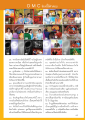
Exploring Spiritual Imagery and Meditation
1. (Images of Buddha, meditation, natural scenes, and traditional textiles)
2. (Images of women interacting, people at a temple, and group discussions)
3. (Black and white images of planets or moons,
This content presents a compilation of images symbolizing spirituality and meditation, encompassing depictions of the Buddha, natural settings, and traditional textiles. It features women engaging in
2
Dhammachai International Research Institute (DIRI) Overview
The Dhammachai International Research Institute (DIRI) is a research institute that traces the roots of the Buddha’s teachings back to original manuscripts with the aim of finding true and clear evide
The Dhammachai International Research Institute (DIRI) is dedicated to tracing the origins of the Buddha's teachings, aiming to discover clear evidence of early Dhamma practices. Established by the 60
5
สังโมทนียกถา: การสร้างบุญเพื่อความสุข
สังโมทนียกถา
ข้พระองค์ขอเล่าเรื่องราวให้ฟังในลักษณะนี้นะ พระองค์ทรงเมตตาและอุบาสกถวายในการสร้างและบำเพ็ญบุญต่างๆ เพื่อความสุขและอร่อยของเราเองทั้งในปัจจุบันและอนาคต. ข้าพระองค์ขอกราบขอบคุณพระพุทธคุณ
บทความนี้เกี่ยวกับการบรรยายของพระธรรมอาจารย์ใหญ่ที่แสดงให้เห็นถึงความสำคัญของการสร้างบุญและการปฏิบัติตามหลักธรรมของพระพุทธเจ้า ซึ่งนำมาซึ่งความสุขและความสงบในชีวิต ทั้งนี้มีการอธิบายถึงความหมายของธรรม
19
Exploring Ancient Thai Meditation Manuscripts and Their Influence
of the original content of the palm-leaf manuscript is provided along with a translation into modern Thai and English. It consists of a correlation of body parts with the sublime attributes of the enl
This content discusses the significance of ancient Thai palm-leaf manuscripts, especially those of the bŏran kammaṭṭhān type, which correlate body parts with Buddha's attributes and suggest daily rec
20
Exploring the Cakras and Early Buddhism
the cakras are located, a location that suggests comparisons with Tantra.
While the primary focus of this journal is dhammakāya, Luang Phaw Dhammajayo has instructed the Director of DIRI, Phrakrupladn
This journal focuses on the study of cakras and early Buddhism, emphasizing neutrality across Buddhist schools. Under the direction of Luang Phaw Dhammajayo, the Director of DIRI, Phrakrupladnayokwara
25
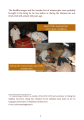
Historical Artifacts from Nong Pa Fa Cave
The Buddha images and the wooden box of manuscripts were probably brought to the Nong Pa Fa Cave before or during the Siamese-Lao war (1826-1828 AD), almost 200 years ago.
Most of the manuscripts are
The Buddha images and wooden box of manuscripts discovered in Nong Pa Fa Cave were likely brought there before or during the Siamese-Lao war between 1826 and 1828. Most manuscripts are in poor conditi
27
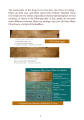
Exploring the Manuscripts of Nong Pa Fa Cave
The manuscripts of the Nong Pa Fa Cave have two forms of writing: Dham Lao from Laos, and Dham Lanna from northern Thailand. These two scripts are very similar, especially on manuscripts dating back s
The manuscripts of the Nong Pa Fa Cave showcase two primary forms of writing: Dham Lao from Laos and Dham Lanna from northern Thailand. While these scripts exhibit notable similarities, especially in
32
Dhamma-kāya in the Pali Canon
Dhamma-kāya in the Pali Canon¹
Chanida Jantrasrisalai
I. Why ‘Dhamma-kāya’ in the ‘Pali Canon’?
The term dhamma-kāya/dharmakāya appears in Buddhist literature of different schools. Previous scholars
The study investigates the term dhamma-kāya as presented in the Pali Canon, aiming to provide a comprehensive analysis that has been overlooked in previous studies. While many references have been mad
33
Reinterpreting Dhammarāya in the Pali Canon
Most of them refer only to the Aggañña-sutta passage, 4 missing out the three Apadāna references. 5 The reason could be either that the scholars concerned have taken the aforementioned text as represe
This paper examines the overlooked references to dhammarāya in the Pali canon, emphasizing a context not previously presented. It critiques the tendency to categorize texts strictly as ‘early Buddhism
46
Buddhism and the Concept of Nirvāṇa
**43** This is, perhaps, as Eliade observes, ‘for the Buddha, one can be ‘saved’ only by attaining nirvāṇa - that is, by going beyond the plane of profane human experience and re-establishing the plan
Eliade suggests that for the Buddha, salvation comes through attaining nirvāṇa, transcending the mundane aspects of human life and entering an unconditioned state. This transformation entails a metaph
50
Understanding the Connotation of Dhamma in Relation to Brahma
In the case that ‘brahma-’ refers to the masculine ‘Brahma’
In case of the term ‘brahma-’ in the three compounds50 being
translated as a masculine ‘Brahma,’51 the comparison of the first and
the third
In this text, the term 'brahma-' is analyzed in the context of its translation as the masculine 'Brahma.' It discusses how the comparison between the Tathāgata and the Brahma, the creator, illustrates
55
Implications of Dhamma and Brahma in Buddhist Teachings
While a conclusion is proposed here to some extent, it may be useful to examine further implications from the parallel usage of the term 'dhamma' and 'brahma' elsewhere, for it may add further underst
เนื้อหานี้สำรวจการใช้คำว่า 'ดัมมะ' และ 'บราเหมะ' ในวรรณกรรมพุทธศาสนา และการตีความความหมายที่เชื่อมโยงกันของทั้งสองคำ เป็นการศึกษาความสำคัญของการใช้คำที่ขนานกัน ซึ่งสะท้อนถึงสถานะความบริสุทธิ์สูงสุดที่
58
Understanding the Concept of Body and Collection in Dhamma
Functionally, however, both terms seem to imply a different relationship between individual members and the ‘totality’ of the whole ‘body’ or ‘collection.’ As a ‘body,’ the ‘totality’ of the whole org
This text analyzes the distinctions between the terms 'body' and 'collection' within the framework of Dhamma, particularly focusing on functional dependence. It argues that while a 'body' maintains es
84
Bibliography of Buddhist Studies
Bibliography
Dutt, Nalinaksha. Mahayana Buddhism. Delhi: Motilal Banarsidass, 1978.
Geiger, Wilhelm. “Dhamma and Brahman.” Zeitschrift flour buddhismus (1921): 73-83.
Gombrich, Richard. “The Buddha’s
This bibliography encompasses significant scholarly works in Buddhist studies, offering insights into various aspects such as the early Buddhist philosophy, the concept of Dharmakāya, and teachings of
114
การบรรลุของพระพุทธเจ้าและอรรถธรรม
ญ๊ษัททําสําทัดะสา adigatạ: that the Lord attained. Imam dhammakāyăm buddharakkhaṇam: the body of Dhamma (dhammakāya) is the property (lakhana) of the Lord Buddha. Yogāvacarapputanna: the practitioners
ในเนื้อหานี้กล่าวถึงการบรรลุของพระเจ้าพุทธเจ้าและการปฏิบัติธรรมอย่างจริงจังเพื่อนำไปสู่การเข้าถึงนิพพาน โดยมีการเน้นถึงความสำคัญของการทบทวนและสวดบทสวดเพื่อกราบไหว้พระ. พุทธศาสนิกชนถูกกระตุ้นให้ถือปฏิบ
32
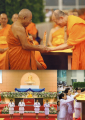
Ceremony of Recognition Among Monks
- The first image (top) shows two monks, one handing an award or plaque to the other, with other monks in the background.
- The second image (bottom left) depicts a formal event with a seated monk in
This content describes a set of images depicting a ceremonial event with monks. The first image portrays one monk awarding another, indicating a recognition of merit. The second image features a monk